

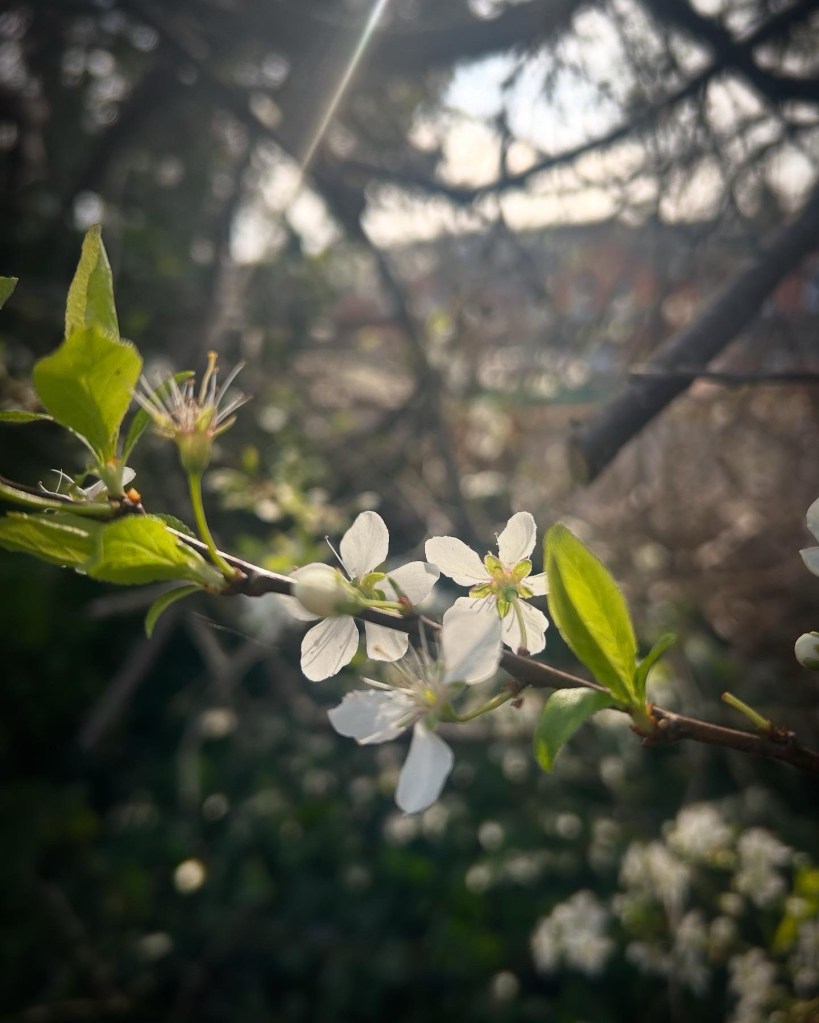
Last month saw another turn of the wheel of the year and the arrival of the Spring Equinox here in the Northern Hemisphere. This year it fell on 20th March – it’s always on or either side of the 21st. It occurs when during the Earth’s orbit of the sun, the sun is positioned exactly on the equator giving us an equal length of day and night. Unlike the solstices, where the sun appears to stand still for a few days (which is the literal meaning of the word ‘solstice’ – stalled sun), the equinox happens on one day at a precise time.
We can use the energy of this time of pause, balance, reset and renewal in ceremony and ritual. The Spring or Vernal Equinox is also now known as Ostara – which is the name given to the Spring Equinox in the neo-pagan/Wiccan traditions, which has caught on more widely in recent years.
Ostara is the name of a Germanic goddess who is associated with the season of Spring, the dawn (another metaphor for renewal) and fertility, as it is the time the plants, trees and animals are springing back into life, growing new shoots, blossoming and reproducing. Ostara is also known as Eostre, or Eastre, is the likely pagan origin of the Christian Easter, the date of which incidentally, is still governed by the moon cycle and is why the date changes every year.
This is how I celebrated the Spring Equinox this year:

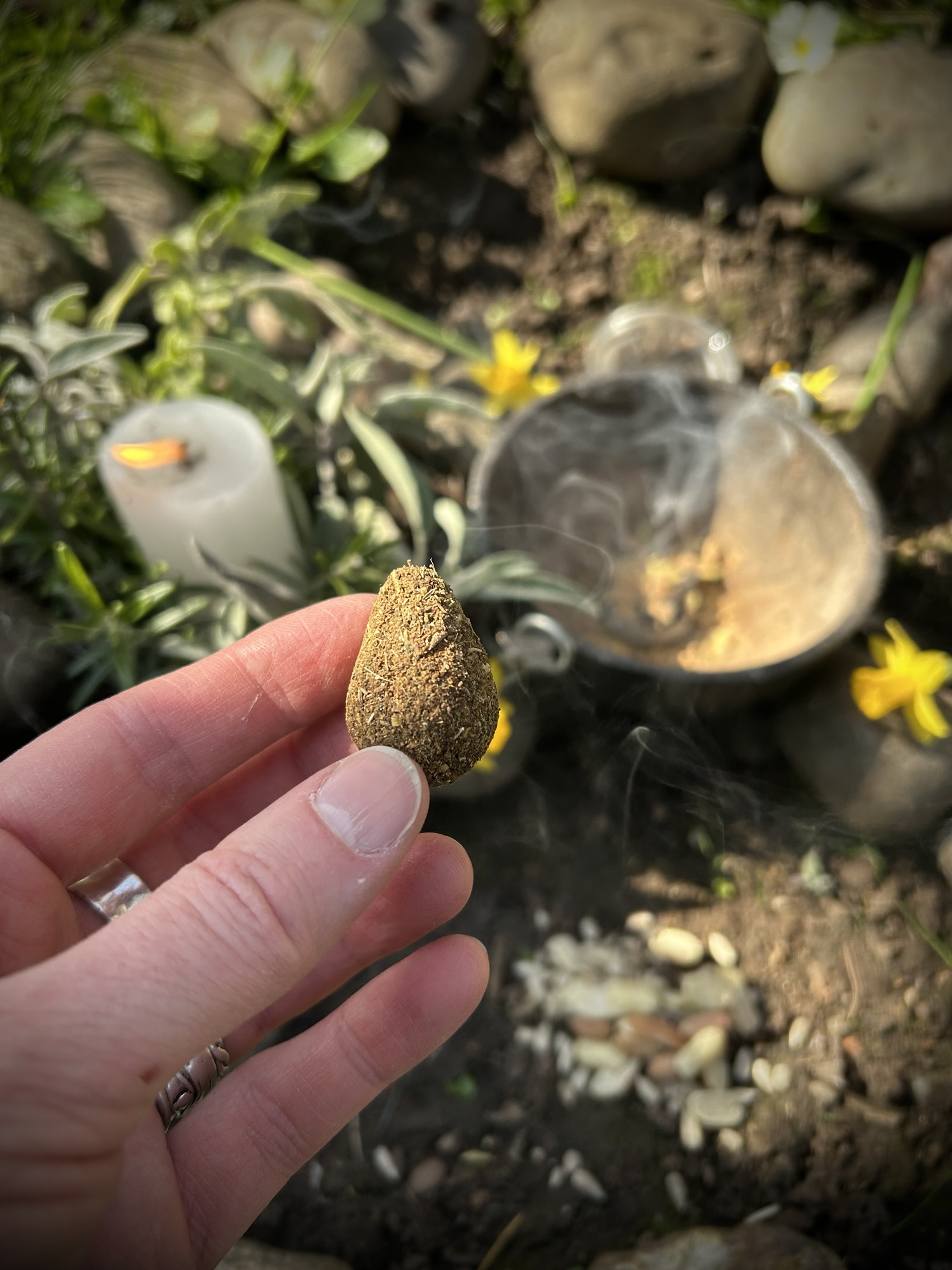
I gathered with a friend in my little sacred outdoor space, and brought a green candle, paper, string and incense offering. We created an altar space on the ground and made offerings in connection and gratitude to the place and the elements with flowers, herbs, seeds, water and offered the incense, which included a special Ostara ‘incense egg’ I had made.
We created a sacred space by calling in the elements and began to reflect on all that we wished to let go of and the ‘seeds’ we wished to gently nurture in the year ahead.
We used a bundle of homemade, dried herbal incense to clear away old energy and visualise old patterns that do not serve us being released. We then meditated in this space of pause and balance, on what else we wished to release and what we wished to grow in the year ahead.
When considering what ‘seeds’ we wanted to nurture in ourselves the coming year, we were clear that this doesn’t have to be about external goals or be achievement-based, it can be about nurturing a new way of ‘being’. We considered what qualities we wished to embody and how we might bring them into being – such as calm, peace and confidence. So for instance, using that example, our written affirmations would be ‘I am peace, I am confidence’. I’m keeping my actual intentions to myself!
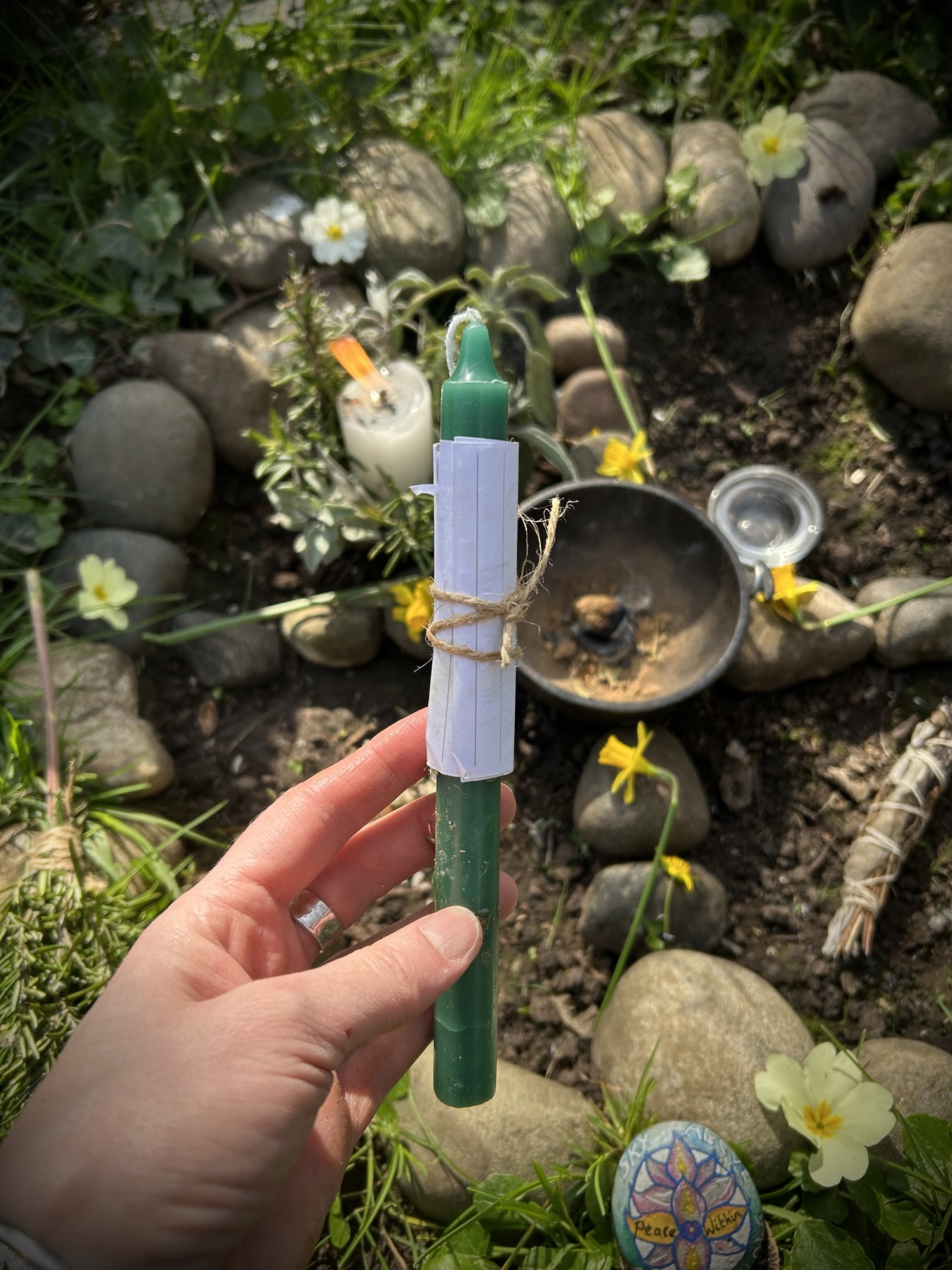
We each wrote our affirmations down on small pieces of paper, folded them and tied them to the candle. We also anointed the candle with oil containing herbs that are connected to cleansing, protection and abundance, both to help the candle burn and support our intentions. (Always practice fire safety when burning this type of candle as the flame is big and wild!) The green candle is related to the colour of the ‘greening’ of spring and the colour for abundance – using the colour and time of year to align with bringing our intentions to fruition and attracting the necessary conditions to achieve our intentions.
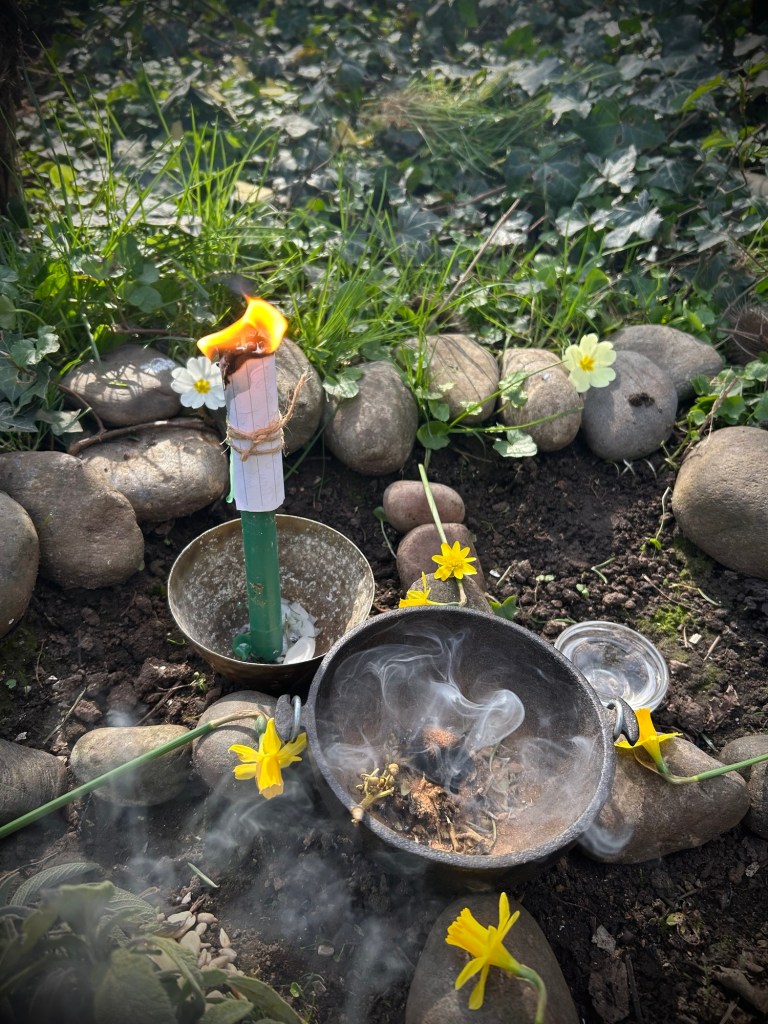
As we lit the candle, we watched it burn, feeling confident that our intentions were released into the world. We sat and allowed ourselves to feel in our bodies the qualities connected to our intentions in the here and now. We also sensed as much as possible and with as much confidence as possible, the candle releasing all our obstacles and what no longer serves us, to clear the way for our intentions to manifest.
We also considered if there were any actions we needed to take to support our intentions and affirmation. (If you are performing a similar ritual or ceremony, you can always pause here to take notes of any insight that arises in this part.) It’s always important to remember it is necessary to to ‘act in accord’ with any intention you have.
E.G: if your intention is to be more confident, then you will need to stretch yourself out of your comfort zone in order to grow. If your intention is to set more boundaries, then perhaps the ‘growth’ is to practise saying ‘no’ to things and sitting with that discomfort. If that’s the case, there might be a need to reflect whether your comfort zone is always saying ‘yes’ for fear of the consequences of saying ‘no’, and also reflect on what support you might need for working with the discomfort of making different choices. It is usually necessary to come back to these kinds of reflections time and again to gently remind and realign yourself to ‘act in accord’.
Manifesting any new intention will require some kind of transformation and growth and that can be very uncomfortable, growth usually is! I like to think of a pot-bound plant and how it must feel for the plant, being pulled at and perhaps even breaking some of the roots in the process, but it’s all necessary to pull it out of that pot, to save it and to plant somewhere more spacious.
The Thomas Jefferson quote is quite apt when talking about making changes for growth: “If you want something you’ve never had, you must be willing to do something you’ve never done.” And perhaps that thing you’ve never done will require coming out of the cosy shell of your comfort zone, whatever shape that is.
The seeds now stirring in Mother Earth this Spring are required to break out of their protective shells/husks in order to grow. They have to completely let go of their seed form in order to transform, grow and bloom. The blueprint of all they are to become is contained within the heart of the seed.
Imagine the strength it takes for the first shoot of a root to break free of the seed husk as soon as the conditions are just right, and all the needs that must be met – enough moisture, enough warmth (or even the frost and cold for some), enough nutrients etc. The roots have navigate the dark, compacted earth to establish themselves, overcoming stones and other obstacles, until the stem is ready to grow up and out towards to sun, to manifest its full potential – and this is not its full potential in comparison to others. It is its full potential within its own set of circumstances. We don’t judge trees for twisting in the wind or castigate flowers growing at angles to get just the right amount of sun, we appreciate all the forms of nature’s beauty and its tenacity. We can learn to do the same for ourselves.
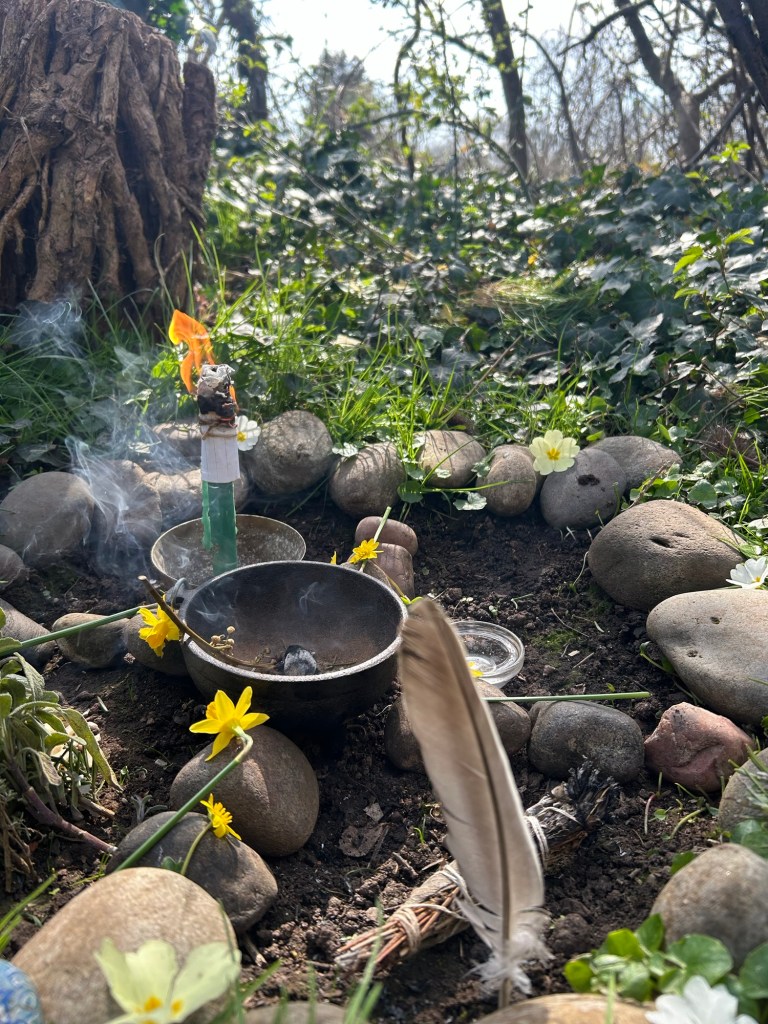
When we create ritual and ceremony aligned with the seasonal cycles, we can see ourselves in the cycles, patterns and needs that are reflected back to us in the natural world, because we are nature!
It’s also worth clarifying that sometimes ‘growth’ is also learning to do less, letting go of things or as in the example above, setting stronger boundaries, being kinder to ourselves and not pushing through or forward in a visible or linear way.
Sometimes the growth we need is giving ourselves permission to tend to our ‘roots’ and grow in an unseen way. A lot of anxiety is unseen. Our growth might be feeling less turmoil in our inner world, our gentle nurturing and blossoming might be just for us to witness, to be able to sit in peace in a room full of people, or say ‘no’ to something. We can celebrate aligning our needs, intentions and growth, whatever form they take, without judgement or comparing ourselves to others.
We’re are experiencing such strange and unsettling times in the world right now. These sacred, seasonal rituals help to ground and centre me and help me align to what is important in my life right now. They also help me to define small steps I want to take to be the changes I wish to see in the world – to be more calm, more present, more confident in my connection to nature and her cycles. This in turn enables me to be more confident in ways I can be of service, first and foremost to the needs of my body, mind and spirit, so that I am resourced to help others where needed and with healthy boundaries.
What ‘seeds’ are you planting this year? What ritual and ceremonies are supporting you?
 Nature-focused, Shamanic Reiki Drum, Reiki & Reiki Massage, Forest Therapy